Trade Business Scaling: How to Go from 1 to 10 Employees Without the Chaos
For many UK trades business owners, the dream of scaling is often met with a harsh reality: more employees frequently equals more chaos. What starts as a solo venture or a small partnership: where you have a handle on every job, every enquiry, and every invoice: quickly spirals as the team grows.
By the time you reach five, seven, or ten employees, the "hands-on" approach that built your reputation becomes your biggest bottleneck. You find yourself answering calls on a noisy site, chasing late payments at 9:00 PM, and wondering why your profit margins aren't reflecting the massive increase in workload.
Growth does not come from doing more work personally. It comes from building a structure that can function without your constant intervention. This guide explores the systemic shifts required to scale a trades business from a one-person band to a 10-employee powerhouse without losing your sanity or your profit.
The Problem: The "Owner-Operator" Trap
The most significant hurdle in trades business scaling is the transition from being the best technician in the company to being its most effective manager. When you have one or two employees, you can still oversee every detail. You know which van needs a service, which customer is waiting for a quote, and which apprentice is running late. However, as you approach the 5-to-10 employee mark, the sheer volume of "micro-decisions" becomes overwhelming.
Physical and Mental Signs of "Scaling Chaos":
The Communication Breakdown: Enquiries are missed, or worse, forgotten. Customers have to call twice to get a response.
The Compliance Gap: Gas Safe certificates, NICEIC registrations, and insurance renewals are tracked in your head or on scraps of paper rather than a centralised system.
The Margin Squeeze: You are winning more work, but your bank balance isn't growing. Inefficient scheduling and unbilled extras are eating your profit.
The Burnout Phase: You are the first one up and the last one to bed, yet you feel like you’re just "treading water."
If this sounds familiar, you aren't failing as a tradesperson; you are outgrowing your current business systems for trades.
Phase 1: Building the Operational Foundation
Scaling is a structural challenge, not a recruitment challenge. If you hire more people into a broken system, you simply amplify the brokenness. Before you put another van on the road, you must organise your back-office operations.
Scaling is a structural challenge, not a recruitment challenge.
If you hire more people into a broken system, you simply amplify the brokenness. Before you put another van on the road, you must organise your back-office operations.
Enquiry Management: A dedicated process for capturing leads so no call goes unanswered.
Consistent Quoting: Using templates and fixed margins to ensure every job is profitable.
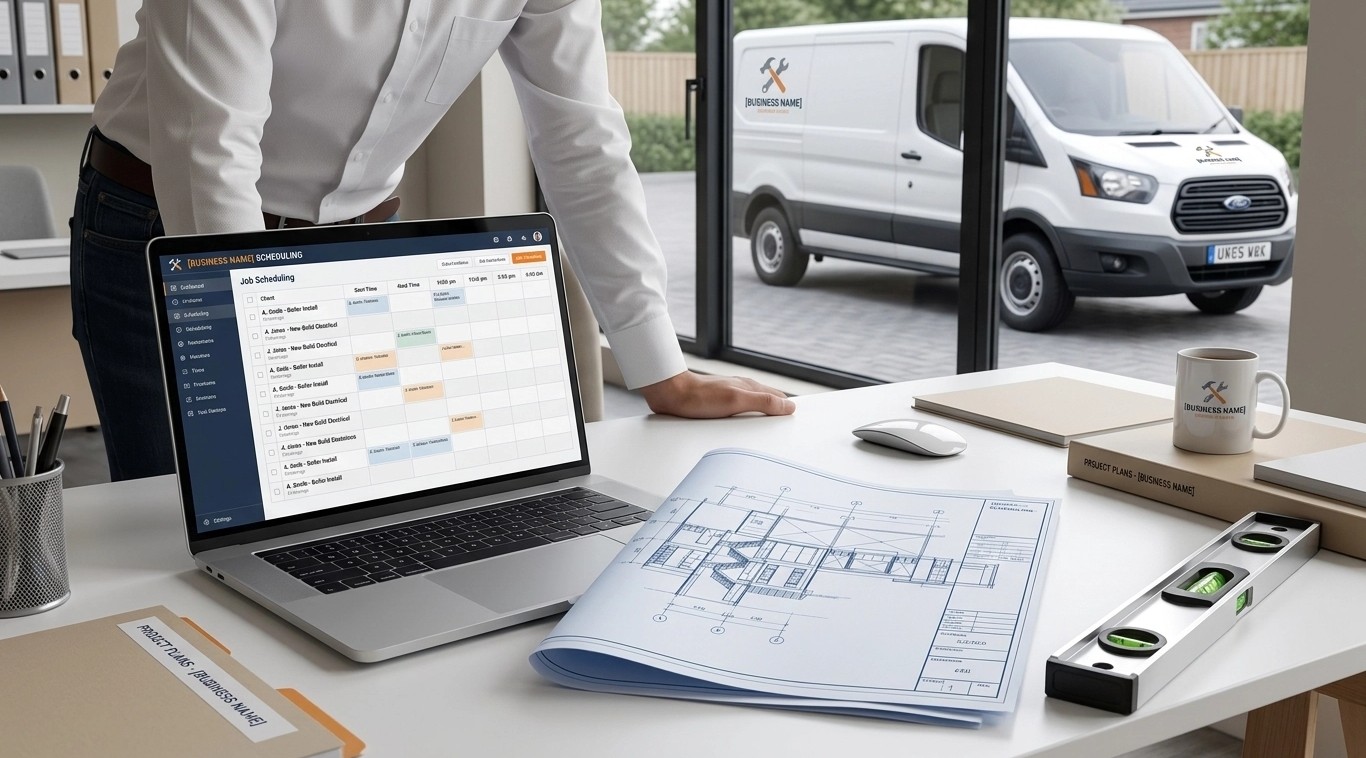
Scheduling & Dispatch: A digital calendar that everyone can see, eliminating the "where am I supposed to be?" phone calls.
Completion & Invoicing: Immediate invoicing upon job completion to maintain healthy cash flow.
Phase 2: From "Doing" to "Managing"
To reach 10 employees, you must stop being the "fixer." If every problem requires your personal attention, your business has a ceiling.
The Importance of Accountability Accountability is not about "checking up" on people; it is about providing clear expectations. When you scale, you need to implement proper structure and systems. Each employee should know exactly what a "good job" looks like, how to document their work, and who to contact when issues arise.
In a 10-person team, you cannot be the primary point of contact for customers. This is where outsourced operations for trades becomes a strategic advantage. Having a professional team manage your calls and admin ensures that your customers receive a consistent experience, regardless of how busy you are on-site or in meetings.
Phase 3: Managing the Risks of Growth
Scaling introduces new risks that can sink a business if not managed proactively. Two of the most common are recruitment failures and compliance lapses.
Smart Recruitment Finding qualified staff is a major challenge in the UK trades industry. Many owners make the mistake of "panic hiring": taking on anyone with a van and a toolkit because they are drowning in work.
The Rule: Hire for attitude and reliability, then train for specific skills.
The Strategy: Consider the pros and cons of hiring vs. subcontracting to maintain flexibility during growth spurts.
Proactive Compliance
As your team grows, so does your liability. Keeping track of 10 sets of certifications, vehicle MOTs, and health and safety RAMS is a full-time job. Scaling safely requires a system that alerts you before a licence expires, not after.
Phase 4: Protecting Your Profit Margins
It is a common paradox: a 10-employee business can often be less profitable than a 3-employee business due to "operational waste."
Identify Where the Money is Leaking
Travel Time: Poor scheduling leads to engineers crisscrossing the city unnecessarily.
Material Wastage: Lack of inventory tracking means parts are "borrowed" or lost between jobs.
Unbilled Admin: Hours spent on the phone or chasing paperwork that doesn't generate revenue.
To combat this, you need a bird's-eye view of your business. You must understand your margins and cash flow with clinical precision. If you don't know exactly how much profit you made on last Tuesday's jobs, you aren't managing a business; you're managing a hobby that pays the bills.
The Solution: Outsourced Operations
The primary reason trades businesses fail to scale beyond a few employees is that the owner is trying to do two full-time jobs: being the Lead Engineer and the Operations Manager.
You cannot be an expert in boiler installations or electrical safety while also being an expert in CRM management, customer service, and compliance tracking. Something will eventually give, and usually, it's your health or your reputation.
At TradeOps Solutions Ltd, we act as your outsourced operations department. We don't just "help with admin"; we own the processes. We manage your calls, handle your documentation, and ensure your business runs with intention.
By taking the back-office weight off your shoulders, we allow you to focus on the high-level strategy and technical excellence that will take your business to 10 employees and beyond.
Conclusion: Sustainable Growth and Peace of Mind
Scaling from 1 to 10 employees is not just about getting bigger; it's about getting better. It requires a fundamental shift from reactive firefighting to proactive management.
By implementing robust business systems, prioritising accountability, and leveraging professional operational support, you can build a business that serves you: rather than one that consumes you.
The chaos of growth is optional. The structure of success is planned.
Are you ready to stop the chaos and start scaling with intention? Explore how our Operations Management and Planning can provide the foundation you need to grow your trade business safely and profitably. To avoid the common pitfalls of the industry and protect your wellbeing, read our guide on how to avoid burnout as a tradesperson.